The goal was never to be perfect
There is a particular kind of speaker who does everything right.
They move with purpose. Their hands are expressive but controlled. Their voice is warm, their slides are clean, their timing is on point. They have clearly prepared. They are, by every measurable standard, excellent.
And something in the room doesn't quite feel right.
You can't point to what's missing. There are no filler words to fix, no awkward pauses to smooth over, no slides to simplify. The technique is sound. But somewhere between the speaker and the audience, something is missing.
I watched this happen once, at a conference I love, a speaker I respect, delivering material that mattered. The audience leaned in. They were listening. They got the content.
But I kept feeling that I didn't quite believe them. Not in the sense that the information was wrong. In the sense that I wasn't sure they were really there.
It may not have been true. It probably wasn't fair. But the feeling was real. And I suspect I wasn't the only one in the room who had it.
This is the thing that no amount of presentation coaching addresses. Not because coaches don't care. But because it isn't a technique problem.
💡 ONE IDEA WELL
Ask someone what they are afraid of when they stand up to speak, and they will usually say something about nerves. Forgetting their words. Going blank. Looking foolish.
Say "Tell me more," and dig a little deeper, and something more specific appears.
They are afraid the audience will get bored. That the room will drift. That people will start checking their phones, or staring at the middle distance, or doing that thing where they are technically still looking at you but have clearly gone somewhere else entirely.
And underneath that, and harder to admit: if they get bored, it means something about me. It means I am not as interesting as I thought. Not as clever. Not as worth listening to.
This is the real fear. Not nerves. Not forgetting a line. The fear of being found wanting by people who came in to hear you speak.
So what do we do with that fear?
We practise. We prepare.
We watch TED talks and take notes on where the speaker pauses and how they use their hands.
We read books about storytelling structure.
We learn that you should open with a hook and close with a call to action.
We buy courses that promise to turn us into confident, compelling communicators.
And slowly, without meaning to, we sand off everything that makes us recognisably ourselves.
We stop umming because we were told it sounds unprofessional.
We stop going off on tangents because we were told it loses the audience.
We stop showing uncertainty because we were told it undermines authority.
We rehearse until the talk feels smooth, and then we rehearse some more until it feels seamless, and by the time we stand up in the room we have produced something polished and considered and carefully constructed.
And something in the room doesn't quite feel right.
The cure, it turns out, produces the disease.
🧰 LESS MESS, MORE MESSAGE
So what is the alternative?
Not being unpolished.
Not being deliberately rough, or affecting a kind of casual spontaneity that is just as performed as the thing it is replacing.
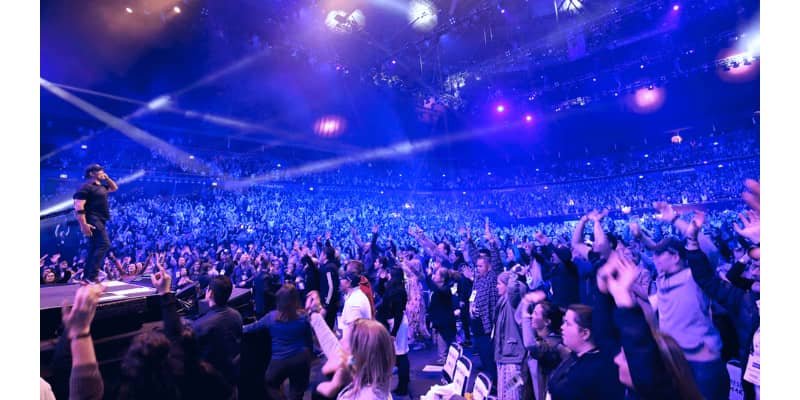
Tony Robbins has built an empire on seeming like he's just telling you the truth from the gut. The informality is a product. The rawness is a set piece.
The alternative is more uncomfortable than that.
It is letting the audience feel that there is a real person in the room with them.
Someone who actually cares about what they are talking about.
Someone who finds this genuinely interesting, or genuinely difficult, or both.
Someone who is not reciting at them but thinking alongside them.
This is what creates connection. Not warmth as a performance. Not relatability as a strategy. Just that small signal that you are actually here, and you actually mean it.
The strange thing is that audiences are extraordinarily good at detecting this. They may not be able to name what they are feeling. They may not even consciously notice. But somewhere below the level of conscious attention, they are asking a question about every speaker they watch.
Do you believe what you are saying?
Not are you right. Not are you prepared. Not are you qualified.
Do you believe it?
And the even stranger thing is that polish, real polish, the kind that comes from rehearsing until every rough edge is smoothed away, is one of the most reliable ways of making the answer feel like no.
Because polish creates distance. It signals that the gap between you and the material has been managed rather than felt. It tells the audience, without meaning to, that you are performing competence rather than sharing something real.
The authority gradient goes up. The human connection goes down.
And the room doesn't quite feel right.
Here is what nobody tells you in the presentation skills workshop.
The audience is not watching you the way you think they are. They are not marking your slides out of ten, or counting your filler words, or noticing that you lost your place for a moment on page four. They are doing something much more instinctive than that.
They are deciding whether to trust you.
Not your credentials.
Not your preparation.
You. The person standing in the room with them, asking them to give you their attention for the next however many minutes.
And the things that make you trustworthy are not the things you have been told to practise. They are not your hand gestures or your vocal variety or your ability to open with a hook. They are the moments when your genuine interest in the subject shows through. When you say something you actually think rather than something you rehearsed. When you are visibly present in the room rather than running the programme you prepared at home.
The audience doesn't want the polished version of you. They want the real one. And those are not the same thing.
This is not an argument against preparation.
Prepare.
Know your material.
Care about your slides.
But prepare in the service of being more present, not less. Prepare so that you can afford to look up from the notes and actually be in the room with the people in front of you.
The goal was never to be perfect.
The goal was always to connect.
These are the ideas I keep coming back to every time I stand in a room and ask people to think differently about how they speak.
Speak soon,
Andy
P.S. These ideas form the backbone of Ready Set Go, a workshop I run for teams who want to present with more clarity and less performance. If you'd like to bring it to yours, you know where I am.
Speak Human is a weekly newsletter — one practical idea on speaking, teaching, and presenting, in five minutes. Join free and get the guide.