Nobody's ever grateful for more tables
There's a slide we've all sat through.
A table lifted straight from the paper, axis labels too small to read from row three, a red box drawn around the number the presenter actually wants you to notice.
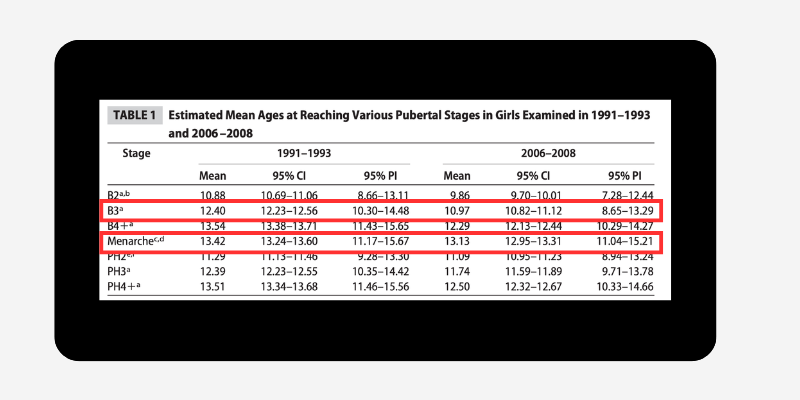
What’s in the box?
They say the same thing every time. You don't need to read all this, just look at the red box.
Except you try anyway.
You can't not.
Your eyes go to the numbers while your ears try to keep pace with the sentence being spoken over them.
You manage this for about four seconds, then something gives. Usually the sentence.
This isn't rigour. It's a design decision, and the decision is: I would rather you struggle than think I've made this too simple.
💡 ONE IDEA WELL
At a workshop recently, a consultant stood up during question time and told me exactly this.
If he wanted to persuade a room, he said, he needed tables. Graphs. Numbers copied straight out of the paper he was quoting. Anything less would reduce his credibility.
I recognised the argument immediately, because I've made it, too. Not out loud, not in a Q&A, but in every slide I've ever built with more evidence on it than the room could actually use. His fear isn't unreasonable. Simplify too far and people assume you didn't do the work.
What struck me wasn't the disagreement.
Disagreement is the whole point of question time, after all.
It was the shift partway through his sentence, from the argument's credibility to his.
So instead of arguing back, I asked him a question. How many times have you left a lecture and thought, I'm really glad that talk had all those tables and graphs in it?
He didn't answer. Neither did anyone else in the room, and for a moment it went quiet, fifty people running the same search and coming up empty.
This isn't only a lecture hall problem. It's the same instinct behind answering "you never do the washing up" with "well, if you look at the data, I did it 23.7 percent of the time last week." Both sentences are defensible. Neither one wins.
🧰 LESS MESS, MORE MESSAGE
That fear, his and mine, isn't stupid.
But here's what happens when you put twelve rows of a table on a screen and talk over the top of it. You've split your audience's attention across two channels that both need their full concentration.
This isn't an opinion about what feels nicer. It's a well-documented limit on how people process information. Text and speech compete for the same working memory, and when they compete, one of them loses. It's rarely the one coming out of your mouth.
So the red box isn't a failure of rigour. It's a failure to apply rigour to the one thing that was measurable in that room: whether anyone could follow you.
Being correct and being persuasive are not the same skill, and only one of them requires you to understand the person in front of you.
🖋️ TRY THIS
Before your next talk, find the slide you're proudest of. Usually it's the busiest one, the one with the most evidence packed onto it, the one you'd point to if someone challenged you afterwards.
Ask yourself: is this slide for them, or is it insurance for you?
Pick one slide like that and cut it in half.
Not the whole talk.
Not your argument.
One slide.
Keep the number that matters and lose the rest. Say the rest instead, out loud, in your own words.
Then watch the audience.
Not for applause.
For whether anyone is still trying to read while you're still trying to talk.
🧭 ASK YOURSELF THIS
Next time you're building a slide, stop being the speaker for a second.
Become the audience member you've been a hundred times, and ask the question I asked that room: when did you leave a talk grateful for how much data was on the screen?
The tables were never the problem. Forgetting who they're for is.
Know a colleague with a talk coming up? Forward this to them.
Speak soon,
Andy
PS. For the record, my own washing-up percentage remains unverified. I've deliberately not run the analysis.